Showing posts with label samgyeopsal. Show all posts

Friday, April 23, 2010

Best & Worst List

Many people have asked what my favorite and least favorite things are in Korea. Here is the list.

The Best

Favorite Things About Living in Korea:
1. Meeting New Friends - students especially, I have enjoyed almost everyone I met and I will miss them when I depart.
2. The Food - Its nutritious, its delicious, it wreaks of garlic and red pepper, and I love it. As if this weren't enough, its reasonably cheap. Nuff said.
3. Traveling the countryside. I have been almost everywhere in this country and it never gets old. I love the fact that the country is 70% mountains, the many National Parks are great, the rivers, and the oceans. It's all good.
4. Learning Korean culture. It's one of the oldest continuous civilizations in the world with over 5,000 years of rich history. Fascinating in so many regards.
5. Beautiful Korean Women - they're everywhere, difficult not to notice, and I love them.

Bets Places to Travel in Seoul:
1. Cheonggye Stream - some may describe it as the heart of Seoul; it features a 11.5 km. riverwalk that is great for jogging or perfect for a stroll.
2. NamSan and Seoul Tower - this mountain is one of four distinct mountains surrounding Seoul. Actually, it's the only mountain completely in Seoul, while the others surround the city. Seoul Tower provides great views of the city and is a favorite amongst tourists.
3. Insadong - popular tourist destination with traditional Korean stores and souvenir shops. Despite the popularity and large weekend crowds, it's a good opportunity to view Korean art and culture in a condensed package. A good recommendation for any Seoul visitor.
4. National Museum of Korea - one of the largest museum in the world, I was originally told it takes a minimum nine hours to see everything. It's a great museum, I've been there three or four times and I still have yet to finish the third floor.
5. SeonyuDo - botanical island located in the middle of the Han River. I first visited here back in October on a perfect Autumn day and loved it.
6. NamdaeMun - outdoor market with everything imaginable for sale. Cheap clothes and a wide variety of camping/hiking equipment are my favorite items to shop for. Also, it's common practice to negotiate the price by saying, "sagae jusayo!" which means "discount please".

Best Places to Travel in Korea:
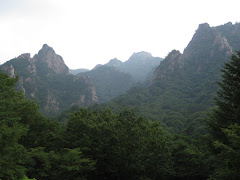
1. Any National Park - there are 20 Korean National Parks and each one is uniquely different. Two of my favorites are SeorakSan and JiriSan. In particular, SeorakSan reminds me very much of Colorado and the Rocky Mountains. I love it.
2. The Southern Coastal Areas of Goeje Do and Namhae - sub-tropical climate and stunning mountain vistas surrounded by blue ocean. It offers a variety of fresh seafood and has a Mediterranean or Hawaiian feel to it.
3. OeDo (pronounced "WayDo") - located off the Eastern shores of GoejeDo, it's one of the most spectacular places I have visited in Korea. Too bad they only permit you one and a half hours to visit there.
4. Jeju Island - Korea's honeymoon island and most popular tourist destination outside of Seoul. It definitely has a Hawaiian feel to it with the dormant volcano and lava tubes, etc.
5. Any Buddhist Temple - usually they're located atop mountains and face South. Each has its own special history, and many date back some 1,500 years.
6. Nami Island - also known as The Nami Republic for mostly marketing purposes, it's still a beautiful garden isle in the middle of the BukHan River.
7. Busan - mainly because my Toledo friends live here and I've always managed to have a good time, it's still a beautiful coastal city with a different vibe than Seoul.
8. The Entire Eastern Coast - steep rocky cliffs and sandy beaches that stretch from Sokcho in the North to Busan in the South. All really beautiful.

Note: I like islands, so its no wonder four of my favorite destinations are islands. Three of these four are private botanical islands that charge an entrance fee, but they're worth the price of admission. Really though, any mountain or coastal area is strongly recommended.

Favorite Korean Foods:
1. Kimchi - it's true. I once read that many foreigners experience "kimchi withdrawal" after leaving Korea, and I expect I too will suffer from this. I know, the thought of fermented cabbage may not sound appetizing, but it truly is delicious, and there are countless varieties. Every restaurant serves at least 1-2 kinds of kimchi as a free side dish, and there literally is an unlimited supply. In addition to the never-ending deliciousness, it's extremely nutritious with a full day's vitamin C content in every serving.
2. Samgyeopsal - it literally means 3 layer pork and tastes like thick cut bacon. Most restaurants serve it for you to grill at your table, accompanied by a big bowl of sliced onions, raw garlic, kimchi, and lettuce leaves for wrapping. I recommend with sesame oil and salt for dipping. Note: also try Ohyeopsal (5 layer pork) for even more porky goodness.
3. Dakgalbi - spicy chicken grilled tableside, either in a large cast iron skillet or on a grill. Served in a spicy red sauce with dok, the traditional Korean rice cake, sweet potato, and green onions. Beware, it's hot!
4. Mandoo - best when served from the back of a truck in the early hours of the morning. Seriously. The Mandoo Truck is a popular late night fixture in my town serving these tiny steamed dumplings filled with either spicy kimchi or gogi (beef).
5. Bibimbap - big bowl of rice served with numerous side dishes. These side dishes are mostly vegetables or various forms of kimchi and are mixed together with the rice and a spicy red pepper paste for a delicious and healthy meal. Sometimes bulgogi (marinated beef) is added along with an egg for protein. The vegetables also represent different colors designed to complement each other and make the presentation more appealing.
6. Naengmyeon - cold buckwheat noodles served with an icy broth and vegetables, and topped with a boiled egg. I prefer bibim naengmyeom because of the spicy red pepper that is included.

Note: There is no tipping in most Korean restaurants, which helps make it affordable. More expensive restaurants, including most Western style restaurants, sometimes charge 10% for tax and tip. In addition to this, many restaurants feature a table buzzer to alert the waitstaff when you want something. This works well, or you can always shout "yogi-yo" (here please) to draw the attention of restaurant staff.

Favorite Korean Alcohol:
1. Black Beer Stout - Most Korean beer tastes like Coors Light, so it's refreshing to sample something that does not. Per the label: "Deep & Rich Premium Beer ~ Stout offers a rich black flavor topped with sweet, smooth & creamy head" Only available at select stores, it's sold in six packs or by the liter.
2. Makgeolli - semi-sweet fermented rice wine. Sold by the half liter, there are many different manufacturers, each with their own distinct taste. My favorite is Sang Makgeolli and is best when served with pajung or Korean style pancake. Also popular after hiking or enjoyed with friends atop a mountain.
3. Soju - it's probably my least favorite alcohol, but it's hard to ignore it's abundance. Really, it's everywhere and seems to be consumed always. It is the national drink of Korea and is most commonly consumed by the shot and with a group of friends or co-workers. This can also be mixed with mak-ju (beer) for a dangerous drink known as so-mak.

Note: Imported liquor is usually expensive, especially when ordering in a bar. Imported beers, including popular American brands, are also expensive (e.g. Budweiser is 5,000 Won per bottle). Wine is becoming popular and can be purchased for reasonable prices at the grocery store, though most Koreans prefer sweet wine, so it can sometimes be difficult to find reasonably priced, "decent" wine.

Favorite Korean Music:
1. Drunken Tiger - Award-winning rap group led by a Korean/American named Tiger JK. Korean pop music, including hip-hop is extremely popular nowadays. Most of it's garbage. Tiger JK is the best. (Drunken Tiger - 8:45 music video)
2. Girls Generation - their music is total crap, but the nine members are hot. (Girls Generation - Genie)
3. Wonder Girls - five member Korean pop group, they recently have become popular in the U.S. following a 2008 MTV documentary and their 2009 tour with the Jonas Brothers. Their music is a higher caliber than Girls Generation, and they're equally as hot. (Wonder Girls - Nobody)

Favorite Korean Television:
1. Il Bak I Ill (1 Night 2 Days) - Korean variety show every Sunday at 630pm on KBS. The plot; 6 Korean entertainers travel to a new destination each week and have to survive, competing in various games and contests to win food and shelter. It's extremely funny, even for a guy who understands very little Korean.
2. Gang Ho Dong - former Korean wrestler turned entertainer and host of Il Bak I Ill. He is one of the most successful Korean MC's and is very entertaining with everything he does. Even though I understand very little he says, he manages to always make me laugh. Recently on a special episode of Il Bak I Ill, he performed a duet with popular Korean singer Baek Ji Young. The original song is titled "My Ear's Candy" and is, of course, a kind of love song. Gang Ho Dong changed the lyrics to describe his love of samgyeopsal. (Baek Ji Young feat. Gang Ho Dong - My Ear's Pig)
3. Iris - KBS television drama which premiered last winter, it's the most expensive Korean drama to date filled with explosions, car chases, and lots of action. Season 1 starred popular Korean actor Lee Byung-hun (Stormshadow ~ G.I. Joe) and the beautiful Kim Tae-hee as South Korean spies in an international web of betrayal and deceit. Yes, it was broadcast in Korean without subtitles, but I didn't care. The Season 1 finale was a shocker with a huge surprise ending. (Iris - trailer)

Favorite Korean Movies:
(Actually, they're the only Korean movies I have seen)
1. Good Morning President - this movie follows three very different Korean presidents and the various issues that plague their presidencies. It's very funny at times, and is told from the perspective of the Presidential chef, who has a unique opportunity to witness each president during their most intimate moments.
2. Take Off - based on a true story, it's a comical tale of the first Korean ski jump team and their preparations for the 1998 Winter Olympics. I actually saw this in the theater without English subtitles so I had no idea what was said throughout most of the film, but I still enjoyed it.
3. Haeundae - I watched approximately 15 minutes before I turned it off. Despite my short attention span, it was a huge blockbuster, the first Korean disaster movie with Hollywood-style special effects.

Note: Korea has a long and rich history of filmmaking, dating back to the turn of the century. Since the mid 1990's, Korean movies have reached a unbelievable level of success, following the first non-government funded movie in 1992. In 2002, the first Korean film won second place at the Venice Film Festival and another won second place at Cannes the year following. Honestly speaking, I regret not watching more Korean films during my stay here.

Favorite Korean Cars:
1. Hyundai Genesis - winner of numerous automotive awards including the prestigious 2009 North American Car of the Year, it's available as a coupe or sedan. It was specifically designed to compete with more expensive European sedans and features rear wheel drive and a near 50/50 weight distribution. The V8 model does not appear in Korea, and even without this, Hyundai has been criticized for the 53 million Won starting price tag versus $33,000 in U.S.
2. Kia K7 - recently released as Kia's all new flagship sedan, it starts at around 30 million Won and is a cheaper alternative to the Genesis, yet priced more than other front-wheel drive sedans like the Hyundai Sonata or Renault-Samsung SM5. Look for it in the U.S. sometime in late 2010 or early 2011.
3. Hyundai Sonata - code name YF, it was first introduced to Korean customers in November 2009. Since then, it has been labeled the "Camry Killer" as Hyundai prepares for serious battle with Toyota. Sleek styling, high-tech electronics, and impressive fuel economy are among its best features. Price starts at 26 million Won, three million Won more than the previous model, which is a sore spot for most Korean buyers. U.S. price tag is $19,000 and up.
4. Equus - Hyundai's exclusive luxury line with a similar relationship as Lexus to Toyota. First introduced in 1999, there is only one model, the VS with its big V8 engine, and it's currently preparing for a U.S. debut sometime in late 2010. Korean price starts at around 80 million Won. U.S. price is projected in excess of $55,000.
5. Kia Soul - unique styling and a surprisingly spacious cabin, it's one of the top selling cars in the U.S. following the Cash For Clunkers program. Mostly due to it's affordable price tag, $14,000, and Kia's legendary 10 year warranty, it also features an impressive 30 mpg.

Note: Auto manufacturing is one of Korea's top five industries, and it remains a favorite subject of study for me. What's most impressive is Hyundai/Kia's explosive overseas growth during the past decade and it's current title as World's Fourth Largest Automaker. Equally impressive; it's recent focus on both quality and design, especially to U.S. buyers who continue to speculate over American brands and are now questioning Japanese quality. Besides this, the ultra-impressive 10 year warranty offered only to U.S. customers is impossible to compete with.

On the flip side, Korea's sixth-largest company faces increasing competition from other Korean automakers such as Renault-Samsung, GM-owned Daewoo, and Ssangyong Motors. In addition, Hyundai has faced harsh criticism from many Koreans who believe the company is focusing too much on overseas product growth at the expense of it's domestic market.

Things I Wish America Could Import from Korea:
1. NoraeBang - private singing rooms each with comfortable couch and your own karaoke machine. The TV's broadcast nature video clips and it truly is a great way to spend an afternoon or an evening with friends. Don't nock it till you try it.
2. 24 Hour Alcohol - Bars remain open until 6am and it's not uncommon to see people drinking into the early hours of the morning. Of course, this can be both a blessing and a curse.
3. Speed Cameras - almost all highways feature these instead of patrol vehicle enforcement. Even better, the cameras are well marked and Korean GPS devices (sold separately) notify you before with a warning if you are over the limit.
4. Public Transit System - at least in Seoul, the subway operates regularly (every 10 minutes on average) and the same with the buses. Cost is reasonable, usually 1,000-1,500 Won for a one way trip, and the T Money Card functions like a debit card. Load it with cash and it can be used for subway travel, bus transfer, and even some taxicabs throughout the country. It's tremendous. On the negative side, the subway stops at 1am during the week and 12am on weekends.
5. Heated Toilet Seats - complete with bidet and various wash functions. It's common to see this in people's homes or in posh restrooms, and they're ultra comfy.

The Worst

Worst Things About Living in Korea:
1. Crappy Internet Reception - mostly experienced in my apartment, so to say the entire country has poor service is unfair. After all, Korea boasts about exceptionally fast connection speed and proudly claims to be the most wired country in the world. Regardless, I cannot manage to get a strong signal in my apartment to save my life. It has seriously been the most aggravating part of my time here.
2. My Apartment - I live in an eight story office building. My apartment is approximately 10'X25'. I was the only resident until about three months ago, when a young Korean couple moved into the apartment next door. Most people cannot believe my accommodations when I tell them where I live. The school once tried to tell me it is upscale for teacher accommodations. It most definitely is not.
3. Split Shifts - Teaching adults is great. I chose to do this with full knowledge of the work schedule, and honestly speaking, I would probably choose it again. The schedule, however, is brutal with 4-5 hours sleep each night, and a 2-3 hour nap every afternoon.
4. Pushing on the Subway and Elevators - I've mentioned this before, and it remains a frustrating aspect of Korean life. There is no personal zone to speak of. Be prepared to be shoved, or to shove your way through a large crowd. Don't be shy about it. Others aren't, why should you.
5. Public Restrooms - most are dirty and lack toilet paper. Some lack paper towels and soap and are extremely cold because the windows are always kept open. Others reek of stale cigarette smoke despite the fact they are clearly labeled as "Non-Smoking". Even more disgusting, it is common practice in Korea to dispose of used toilet paper in a trash can next to the toilet. Yuck!
6. Suicidal Delivery Drivers on Motorbikes - they're f***ing crazy and have no shame. Sidewalks are open roads for motorbikes and traffic laws have no significance. Watch your back and check your mirrors more than once.
7. Spitting in Public - it's disgusting but very common to see this. Even though I have been told it's considered rude amongst most Koreans, and it may even be illegal, everyone seems to do it. I've witnessed little old ladies clearing their throats and spitting on the sidewalk. People also do not seem to care where they spit. Inside buildings, restaurants, elevators, or even the subway; it's all fair game. Really, it's that bad.

Least Favorite Korean Foods:
1. Soondae - Korean version of blood sausage. It's pronounced similar to "sundae", so I was most confused the first time I was introduced to this.
2. Silkworm Larvae - I have never tried this and I never will. However, it remains a Korean favorite.
3. Dried Squid - sold in every convenience store as a snack food, it's also popular at sporting events such as Korean baseball games and soccer matches. It looks like dried squid and smells like dried squid. Yuck!
4. Dog - it's not as common as it once was in Korea, though I am told it still exists. Obviously, I have never tried this and I don't intend to. Many Koreans feel the same way.

Note: Surprisingly, many Korean foods feature the something you never expect to find in a country known for it's centuries-old culinary traditions; mayonnaise. Even more surprising is the reaction when restaurant staff learn some Americans do not actually like mayonnaise. A perfect example of a normal food with this surprise ingredient; pizza. First of all, Korean pizza features some of the most bizarre toppings like shellfish, squid, sweet potato, fruits, and many others. Top it off with a drizzle of mayonnaise and you have one messed up pizza. Serve it with a side of sweet pickles and a once loved favorite food can become extremely hated.

I despise mayonnaise, pronounced "mayo-naiz-e", and it's especially difficult to learn 1) how to properly pronounce the word, 2) how to ask for sandwiches, hot dogs, salads, and many other "western" foods without this troublesome topping, and 3) learn to manage the reaction most staff give you when special ordering. McDonald's is a fine example, as is Quizno's, Subway, and Mr. Wow Hot Dog. The worst experience I suffered; a fruit salad with what appeared to be a sweet-yogurt dressing. Nope, sure enough, it was mayonnaise.

Strange Korean Phenomena:
1. Korean Fan Death - it's true. Koreans really believe that people can die from sleeping in a room with the fan on. Despite your best efforts to argue the point, including scientific evidence against this, their strong belief remains.
2. Writing in Red Ink - this is reserved only for names of the dead.
3. Avoid the Number 4 - it sounds similar to the Chinese word for 'death', which is never a good thing.

Things I Wish Korea Could Import from America:
1. Mexican Food - it's available in Seoul, but it's rare. There are only two chain restaurants I know of; Tomatillo Grille and On The Border. What's most surprising about its absence is the similarity between Korean and Mexican foods, mostly the fresh vegetables and spicy peppers. They have no idea what they're missing.
2. Microbrews - imported beers are available in western bars, though expensive. Microbrews are noticeably absent.
3. Medium to Large Dogs - 99% of dogs in Korean are miniature and wear clothes. It's disgusting. Even worse, they are carried around like children and can be found in the arms of women in department stores and grocery stores.
4. Smoking bans and Enforcement of these policies - even though it is illegal to smoke in public buildings, it's very common to witness people defying these laws, mostly because the government does not enforce this. To say Korea is one big ashtray is an unnecessary and extreme exaggeration, but it sometimes feels this way when people smoke in elevators, public restrooms, etc.
5. Cruise Control - yes, it's true. Cruise control is illegal in Korea so nearly all Korean cars lack this feature. This makes maintaining a constant speed through the many speed cameras on the highway difficult at times, and you don't miss it till its gone.
6. Car Seats for Children - I know it's difficult to believe, but it's true. Parents hold their infant children on their laps while traveling in cars. Shocking in every regard, considering the dangers we all know exist when driving.

I'm sure there are many other things I am forgetting. I've tried to remain positive in my reporting, and mostly, it is positive. Please forgive me if I sound otherwise, but there are obvious cultural differences I simply do not understand. In turn, I'm sure many people cannot understand some of my behaviors as well.

Welcome to Korea.

Thursday, March 18, 2010

March News

Less than two months to go..

Late February/early March brought unusually warm temperatures to the Korean Peninsula. Perhaps it was a bit premature to indulge in the warmth, but damn it felt good. It was especially nice to open the windows in the apartment and get outside and run.

Sadly, less than two weeks later, the premature nature of the "false spring" proved true with return to more winter-like temperatures and a light snowfall March 8th. Damn!

Recent holidays:

Apparently, in Korea, along with Taiwan and Japan, they celebrate Valentine's Day on February 14, and something called White Day one month later on March 14. I guess the idea behind this is Valentines Day is for the men to indulge themselves with gifts and attention from women, and women, in turn, indulge themselves with gifts from men on White Day. Go figure.

March 3rd was Samgyeopsal Day, an informal Korean holiday. Because "Sam" means three in Korea, the date is obvious. Samgyeopsal is "3 layer pork". I was completely oblivious to this, but once I learned of the holiday, I celebrated with a scrumptious lunch of my favorite Korean food. Besides, who doesn't love delicious pork grilled table side with all the traditional accompaniments? Lunch or dinner, it's all good with me!

March 1st was Korean Independence Movement Day. This date marks a significant event in Korean history, when 33 nationalists marched against Japanese occupation in 1919. The nationalists were later arrested, tortured, and this event sparked an outrage amongst the Korean people. To the Koreans, it's just one more incident in a long history of hatred against Japanese atrocities.

The March 1st holiday meant another 3 day weekend for Ethan, so I returned to the Taean Peninsula, only this time with a car. Last time I visited the area was in August (Week XVI) with my former friend Alvin, prior to his expulsion from the country. Because we only had public transit at that time, we were limited to our campground at Mongsanpo Beach and we could not thoroughly explore the area. It was especially uncomfortable on the ride home, when Alvin and I had to stand for over three hours on the bus. Following this bus ride from hell, I vowed to return one day under more comfortable circumstances.

Following a three hour car ride with moderate traffic and light rain, Gemma and I arrived in Mallipo late Saturday afternoon, just in time to select accommodations prior to the sun setting. After about an hour of comparing various beachfront pensions, we finally selected the Pinocchio Pension. It was a near perfect setting, and my travel partner was somehow able to convince the owner to provide us with a 20% discount for two nights stay. Hooray!

Mallipo is a beachfront community located approximately 175 kilometers Southwest of Seoul, at the Northern tip of the Taean Peninsula. The entire peninsula features some 530 kilometers of coastline and contains some 120 islands. A large part of the area consists of the Taean Coast National Marine Park, which boasts 230 kilometers of shoreline and 72 islands of its own. The topography is composed of low pine-filled mountains, large sandy beaches, and rocky cliffs overlooking the ocean. It's really beautiful, and as I previously noted, reminds me a lot of Northern Michigan.

Numerous fishing villages dot the area and serve as both a tourist attraction and a great place for seafood lunch. Squid is popular, as is hameltang, a shellfish noodle dish served in a hot broth. Batter dipped and fried prawns are also a treat, and can be purchased from a variety of street vendors. I chose to avoid most dried fish, including the scary alien-looking fish and the ever-popular Korean favorite, dried squid.

The Chollipo Arboretum is another well-known attraction, located only a few kilometers from Mallipo. I first learned about this in a Wall Street Journal travel article back in May 2009, and since then, I have always wanted to visit. The article titled Seoul: One Man's Dream of a World Class Arboretum is worth the time to read it, and actually, that's what originally introduced me to the Taean area. Sadly, the weather was uncooperative the day we intended to visit there, though I did strongly evaluate this decision in the parking lot, and I took a brochure from the park prior to leaving.

Total cost of the weekend adventure was around 300,000 Won, which included gas (60,000 Won), two nights lodging (160,000 Won with discount), groceries at E-Mart and meals. Not bad for a euphoric weekend and some quality time with the lovely Gemma. The highlight of all this was spotting the semi-naked elderly couple in the backseat of an SUV parked at Mongsanpo Beach. That was a true surprise.

Other news:

I reunited again with former student and good friend, B.H. for BBQ dinner and good conversation. After dinner, he invited me to his home for coffee, which is a beautiful luxury apartment in the town of Suji. I also was fortunate to meet his wife for the first time. Sadly, I fear it will only be possible for B.H. and I to gather again one or two times before I depart for the U.S.

On a recent trip to COEX Mall, I noticed that Crazy Heart was showing at the theater and decided to watch it. This was only my fifth experience at the Korean cinema. Previous films included last year's Star Trek, Avatar (in 3-D), 2012 (I regret watching this), and the Korean film Take Off.

Lately I have been suffering an extreme longing for Western food. Please don't mistake my words, I very much love Korean food, it's just I'm tired of the same old restaurants in Sanbon. This has led me to several new restaurants in Seoul.

Mad For Garlic is pretty much what the name suggests; garlic everything! It's a Korean chain with 11 locations and an impressive wine list, for Korean standards. For an appetizer, we ordered a large caesar salad, pretty much traditional with a creamy garlic dressing, and crunchy croutons. Most delicious, and we agreed it was the best part of the meal. A thin crust cheese with pizza gorgonzola and a pasta dish loaded with garlic and Mexican spices were shared for the main course. The pizza was good, but the pasta was overwhelmingly spicy. Total cost of the food was around 45,000 Won plus tax. A bit on the expensive side, but unfortunately, that's the price you pay for Western food in Korea.

Chili King Korea is located in Itaewon, the infamous foreigner neighborhood of Seoul. I first read about it in an article published in The Korea Herald, which can be a great way to learn about different restaurants throughout Seoul. Sadly, both Gemma and I were a little disappointed in The Chili King. The burger was not as delicious as my local favorite, Krazy Burger, and the chili cheese fries were a poor attempt with crinkle cut fries, a tiny portion of chili, and "cheese" from a squeeze bottle. The restaurant is a tiny shoebox located off an alley, and the owner enjoys singing to an assorted sampling of classic 80's music while preparing your food. All this has a cost of around 30,000 Won. Not a good investment and a poor attempt at satisfying a grown man's craving for some chili.

Sorrento Pizza and Pasta is the surprise hit of the season. I have now sampled both their margherita pizza and their gorgonzola pizzas. Each are an excellent creation, loaded with cheese and priced around 14,000 Won. The gorgonzola is also topped with salty potato chips, which gives it a little crunch and some added flavor. Honestly speaking, this pizza is better tasting than the similarly-priced version at Mad For Garlic.

That's about it. Next weekend is another three day holiday from school, and I am planning a reunion with my friends in Busan. Following this, I'm sure there will be lots to report.

Wednesday, January 13, 2010

KOREAN New Years Trip

My 11 day winter vacation resumed exactly 9 hours following the conclusion of The Korean Road Trip. 11 days away from school was spectacular, though, it proved to be to be somewhat tiring, and, of course, too short..

Papa Sparrow arrived at Incheon International Airport on Monday, December 28th at 9pm. His flight was without incident, or so he says, and it took 13 hours to fly from Detroit to Tokyo, and another 2 hours to fly from Tokyo to Incheon. He was tired from the flight, though he recovered well and was a new man early Tuesday. Well, sort of...

The weather in Seoul was brutally cold this week, and so our activities were limited. Tuesday (Day 1) was spent touring the sights of Seoul. Namsan, Seoul Tower, Gwanghamun, Namdaemun, and Insadong were all part of the day's events. These are some of Seoul's best tourist features, in my opinion. Should the weather have been better, and we had more time, I would have also included such places as Seonyudo, the National Museum of Korea, 63 Building, Gyeongbokgong, and a Han River cruise. Korean street food such as pajung and odang were introduced in the Korean markets, and lunch at one of Seoul's best sushi restaurants, Sushi Hyo, was also included. Yum!

We visited the lonesome town of Sanbon on Wednesday (Day 2), and later a trip to Paju, one of the Northwestern-most cities, located near the DMZ. Similar to last week's experience near the Eastern shores, the DMZ is a sobering experience, heightened especially by the bitter cold temperatures in the air that day. Apparently, while snapping photos of the area, I was scolded by a South Korean soldier and asked (told) not to photograph certain things. I say apparently, because I did not originally hear this and so I continued snapping photos without care. Thankfully, no incident prevailed.

There are numerous DMZ tours offered, and tour buses depart frequently from Incheon Airport and various locations throughout Seoul. In order to actually visit the DMZ line and stand feet from North Korean soldiers, you must be a part of one of these organized tours, which is probably a good idea so tourists from Ohio do not accidentally step across the line and cause an international incident. Unfortunately, these tours also require half the day and are costly; usually 70,000 Won per person or more. Thus, we did not partake in a tour, and instead, opted to visit the Reunification Museum and look out at North Korean soil from a distance of about 2 kilometers across the frozen river.

Dinner Tuesday night was at a famous traditional Korean restaurant named SamcheongGak. (About SamcheongGak) It's located atop Bukak Mountain overlooking Seoul and is a magnificent setting. It has a rich history, mostly due to it's location near the presidential residence and government offices, so many important historical events have occurred here. The decor inside the restaurant is beautiful and dinner was exotic. A variety of traditional Korean foods were served, which were most unique and served as one of the best dining experiences.

Thursday (Day 3) began early morning as we boarded a KTX train for Mokpo, Korea's Southwestern-most city. The 3 hour train ride was without incident, and it was especially nice to look at the passing countryside, which was blanketed with fresh snow from the night before. It was beautiful, especially when traveling on the ultra fast, ultra quiet, and ultra comfortable KTX.

Noon arrival in Mokpo meant we had to immediately head to the Mokpo Ferry Terminal to secure our passage to Jeju Island. This was, unfortunately, not a smooth endeavor. After arriving at the ferry terminal, we quickly learned that the ferry ship we had reservations on was cancelled due to bad weather, and we were forced to take another vessel. In other words, the second ship was now sold out, and actually overbooked. Individual ticket prices remained the same at 45,000 Won, but unfortunately, there were no reserved seats and so only floor seating was offered. This would normally be okay for someone like myself, but the senior Mr. Sparrow cannot stand or sit on the floor for five hours. So the back and forth game of elementary communication with the representative began; trying to negotiate some form of seating.

The hero of this story was Gemma, who, via telephone, was somehow able to convince the ferry representative to arrange priority seating for us, in the ship's lounge, which turned out to be fairly decent, and thus diffusing the situation. I have always been fortunate when traveling in Korea and have had the beneficial resource of many students and friends who seem to be there to help whenever I need it most. Honestly speaking, my travels would not be nearly as smooth without their assistance and I am forever grateful.

I must admit, the experience at the Mokpo Ferry Terminal was one of the worst experiences I have had in Korea. I understand that ferry reservations can be cancelled due to weather, but as a foreigner and tourist, it's regrettable that the ferry operator does not have a better system for handling this. Especially for foreigners, who clearly do not speak Korean very well, one would think the boat company would employ an English speaking representative to ease the pain during such situations.

This is a prime example of how the Korean Tourism Organization, which hopes to attract 8.5 million visitors to Korea this year under their "Visit Korea" campaign and help bolster the nation's service industry, can work with business owners who are a crucial part of the tourism industry to make the experience more accommodating for foreign tourists. Imagine if we had arrived later and our reservations would somehow not be honored, we would be left without a place to stay in Mokpo, an empty hotel room on Jeju, which was prepaid, and perhaps, no possibility of returning to Seoul.

It should also be noted that I was told, thankfully so, there was a strong possibility the ferry would not be operating on Sunday, our scheduled day to return to Mokpo. This was especially alarming since the other Mr. Sparrow had a flight to catch early the following day departing Seoul. So, I am left with the belief, and recommendation, that the ferry should be avoided at all costs when traveling to Jeju. Instead, any traveler should take a flight, both of which, operate regularly from Seoul and Busan. This is exactly what we arranged for our return trip to Seoul.

Jeju Island

All the difficulty at the ferry terminal was probably worth it because Juju is fantastic in every way. Jeju do (island) is approximately 1,846 square kilometers and is located 130 kilometers from the Southern coast of Korea. South Korea's tallest mountain, Halla San, stands at 1,950 meters (6,397 feet) above the sea and is it's biggest feature. It's a dormant volcano and so the island is volcanic in it's geological makeup. Koreans sometimes call it "Honeymoon Island" because of its popularity with newlyweds, though many couples now vacation in Hawaii, Philippines, and other destinations.

We arrived in Jeju around 7pm, just in time for a brief hotel check-in, rental car pick-up, and New Years Eve dinner at a nearby ohgyeopsal restaurant. Ohgyeopsal is similar to samgyeopsal, except oh is 5 in Korean, instead of sam (3), so the pork has an extra two layers of deliciousness.

Deanna Ho, an American we met on the ferry ride over from Mokpo, also joined us for dinner and New Years celebration. Our new friend was traveling Korea solo, on a one week vacation from work, and eager to experience the Korean countryside and culture. She and I later visited the Jeju Casino at the Marriott Hotel for some blackjack and New Years toasting.

Strangely, Koreans are banned from gambling and cannot enter casinos. Apparently, the casinos exist only for tourists, so a passport is required to enter. Alcoholic drinks are complimentary, but like any casino, they expect you to throw some money around.

Friday (Day 4), New Years Day, we traveled by car to the Eastern side of the island and visited the Manjanggul Lava Tubes along with other local sights. One of the lava tubes is 7,416 meters in length and 30 meters high at parts. Literally, it's big enough to drive a train through, and according to the Jeju tourist info, it's one of the largest lava tubes of its kind in the world.

We also visited Ilchulbong, a stunning 90 meter (300 foot) high crater with a diameter of about 600 meter or 2,000 feet. It rises above the sea like a giant crown and it's a popular hiking spot for many Koreans. They also say sunrise is best viewed from here, though, regrettably, we didn't experience this. Aside from Halla San, Ilchulbong is one of the most recognizable features of Jeju.

Saturday (Day 5) was spent on the Southern and Western halves of the island. The Southern side, known as Seogwipo, is the most beautiful part of Jeju, in my opinion. In order to get to Seogwipo, we drove the mountain pass through the center of the island, climbing to around 1,100 meters and passing snow covered landscapes. What makes the southern side so beautiful are the many waterfalls and coastal cliffs along the edge of the sea.

And a trip to Jeju is not complete without stopping at the Health and Sex Museum, but ticket prices are expensive (15,000 Won per person) so we did not go inside. Instead, I suggest the gift shop and outdoor gardens, which feature anatomical stone statues. In other words, fun for the whole family.

It probably takes about 4 to 5 hours to circumnavigate the island of Jeju. Touring the island can be affordable by bus or group discount rate, though you are limited to your activities, and like any organized tour, are on a time schedule. Transit buses are available but probably difficult without a native Korean speaker or a firm grasp of the language. Instead, I suggest an economy car rental at 60-70,000 Won per day, including insurance. It gives you the freedom to see what you want, usually more of the island, and on your own time schedule.

The 8am return flight to Seoul on Sunday (Day 6) was far less painful than the ferry experience. Jeju Airlines suggest you arrive and check-in a mere 30 minutes before your flight, and the security screenings are far less comprehensive than other parts of the world. The flight lasted approximately one hour, and we were on the ground at Seoul Gimpo Airport by 9am. Gimpo is the older airport, pre-Incheon, and located closer to Seoul so it is now used for mostly domestic flights.

The temperature difference between Jeju and Seoul is dramatic, probably around 20-30 degrees Fahrenheit, and the bitter cold in Seoul was an unwelcome dose of reality. The end of an 11 day vacation was another unwelcome reality, and a sad goodbye with my father was the official end of the trip. He was my first and only visitor thus far, and I'm so glad he made the trip. It was a great holiday.

Classes resumed early Monday morning, 6:30am, and life in Korea continues. Eight months completed. Four months remaining.

God bless and Happy New Year!

Tuesday, May 26, 2009

KOREA Day 30

Tues, May 26, 2009 at 7:30pm

There is much mourning in South Korea following the death of former President Roh Moo-Hyun. Outside my apartment building, and in the center of Sanbon, there is an alter with a large picture of the fallen president, and many people have placed flowers. Crowds have gathered here forming long lines to pay their respects. I have witnessed many people bowing, praying in front of the alter, and crying. It's crazy to see so many sad people. I cannot recall a reaction like this, in my lifetime, to the death of a U.S. president. One of my students probably said it best, when he compared this event to the tragic death of Princess Diana in England. President Roh, it seems, was truly a man of the people, and I was told, brought positive change to the Republic of Korea. His sudden death is a tragedy.

Obviously, not everyone feels as strongly about this. Some, I have learned, did not agree with the man's politics, nor his pending corruption charges. The students, however, do not seem to mind discussing the man in class or what he meant to the nation. In fact, almost all my classes Monday and Tuesday started with this discussion. Monday's announcement concerning the recent North Korean nuclear test does not appear to have any noticeable affect on the South Korean people. At least not yet. Their minds and thoughts are elsewhere.


After posting the Week IV update late Sunday afternoon, I hiked to the top of Suri Mountain. It's roughly 30-45 minutes to the peak, depending on the trail and rate of speed, and it's a damn good workout. My shirt is usually well soaked and I am short of breath by the time I reach the top. So when I arrived around 7:30pm Sunday night, it was dusk and was a beautiful spring evening. There was a middle-aged Korean man at the top drinking coffee, smoking a cigarette, and enjoying the view. He spoke broken English and later introduced himself as Kook, a 52 year old technician from Sanbon. He offered me a cup of coffee from his thermos and I shared a granola bar with him. He also spoke some German, so we were able to share a few words before I exceeded my limited vocabulary. We enjoyed relaxed conversation (in English) for perhaps thirty minutes before both heading back down the mountain. During our descent, he invited me to have dinner with he and his son at a nearby restaurant. A most gracious offer, which, I accepted. Together, we feasted on samgyeopsal (Korean BBQ - thinly sliced pork similar to thick-cut bacon) and Kook and I shared three bottles of makgeolli. This, you may remember from the KOREA Day 10 Update, is the milky Korean rice wine, which tastes sweet and sort of similar to Squirt. It's actually kind of good, especially when consumed in "one shot" (Gun-ba), and toasted with new friends.

After dinner, Kook and his son invited me back to their apartment for coffee and bagels. He actually offered me more makgeolli or soju, which I declined because of early morning work. It turns out, he and his son share the spacious 15th floor penthouse apartment overlooking the mountain, and he has two adopted small dogs that he said were once homeless. After a tour of their home, I was invited upstairs to the rooftop where he maintains a beautiful garden filled with several potted plants and herbs. After listening to him identify each plant by it's English name and talk about how long he has been growing them, it was obvious he spent much time caring for these plants and they are truly his passion. Kook sort of looks like Mr. Miyagi (Pat Morita) from The Karate Kid, especially when tending to his garden.

The 16th floor garden was pretty cool, and the coffee and bagels were a fine after dinner treat, but what was most amazing was the entire evening. I left my apartment at 6:30pm with every intention of taking a quick evening hike and returning to my apartment for a relaxing dinner and preparations for the coming week. Instead, I met a new friend who bought me dinner, practically poured makgeolli down my throat, and invited me back to his residence to share more stories and show me something that is most special to him. But this is not an isolated experience. My short time here has been filled with stories like this which make for good blog updates and enrich my relationships with many Korean people. I continue to be impressed.

Peace and love in Korea.